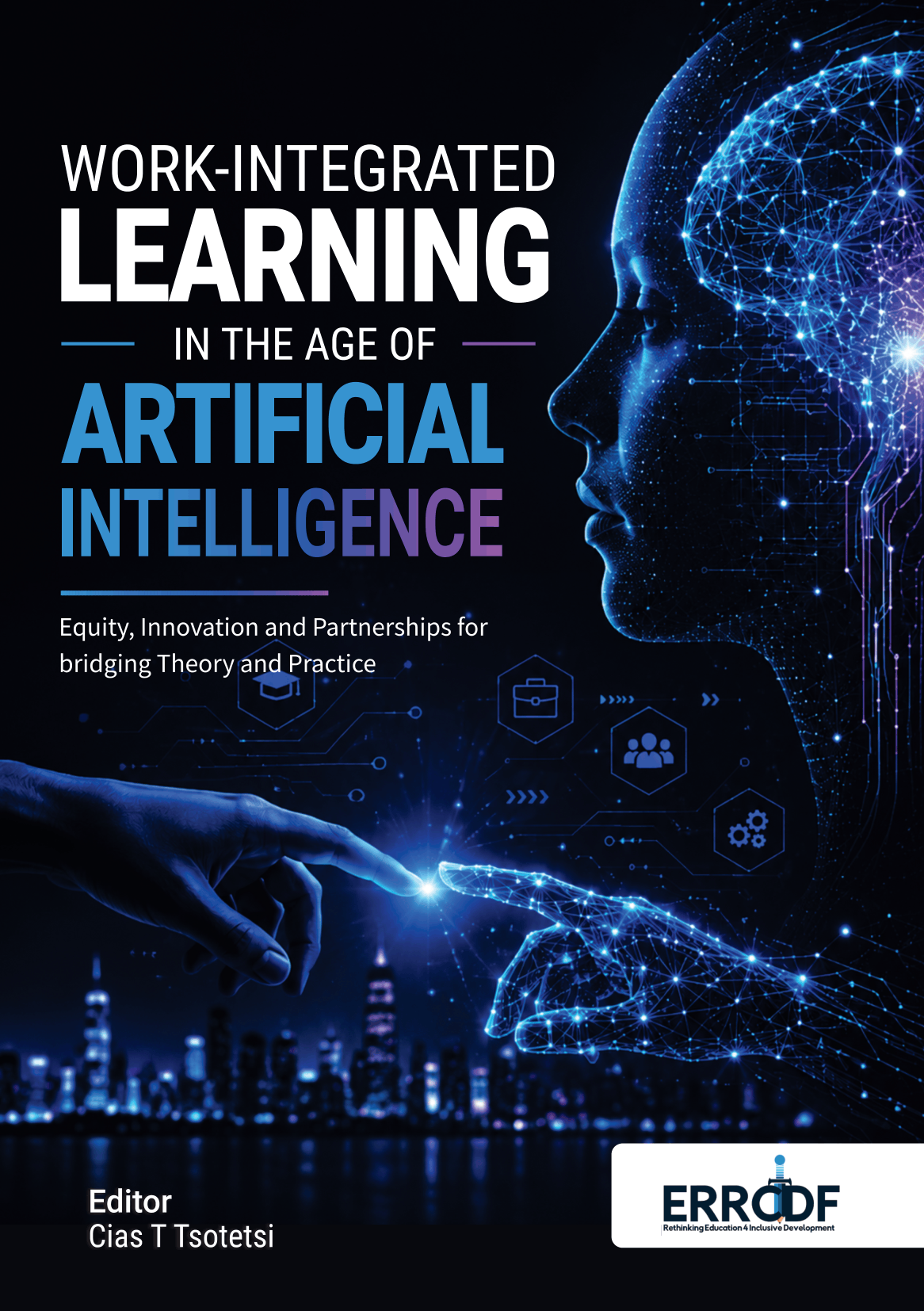
Work-Integrated Learning in the Age of Artificial Intelligence: Equity, Innovation, and Partnerships for Bridging Theory and Practice
DOI:
https://doi.org/10.38140/obp5-2026Keywords:
Work-integrated learning, artificial intelligence, equity, innovation, partnerships, theory and practiceAbstract
The rapid integration of artificial intelligence (AI) into higher education is reshaping how students are prepared for practice, yet its implications for Work-Integrated Learning (WIL) remain fragmented and underexplored. This book addresses that gap, bringing together original, evidence-based studies that examine the relationship between AI and WIL across disciplines, institutions, and contexts. Rather than restating existing knowledge, each chapter advances a distinct scholarly argument, forming one of the first integrated accounts of how AI is transforming the pedagogical, ethical, and structural dimensions of WIL. The volume is notable for its methodological rigour and breadth. Contributors draw on bibliometric and systematic reviews, qualitative case studies, conceptual analyses, and autoethnographic methods to produce new empirical findings and theoretical insights. This plurality mirrors the complexity of AI-mediated WIL and ensures that conclusions are grounded in systematic inquiry and open to scholarly scrutiny. A further strength is the book's critical engagement with equity. Several chapters consider how AI-driven innovation may widen opportunity or deepen inequalities, particularly in rural, under-resourced, and Global South settings. Therefore, by foregrounding African and other resource-constrained contexts, the collection offers knowledge that is missing from a literature dominated by Global North perspectives. Aimed at researchers, academics, postgraduate students, policymakers, and practitioners, the book bridges theory and practice, offering evidence-informed guidance for the design, supervision, and governance of AI-enhanced WIL. Underpinned by rigorous peer review and a focus on equity, innovation, and partnership, it makes a substantial contribution to this field.
Downloads
Published
Issue
Section
License
Copyright (c) 2026 Cias T Tsotetsi

This work is licensed under a Creative Commons Attribution 4.0 International License.