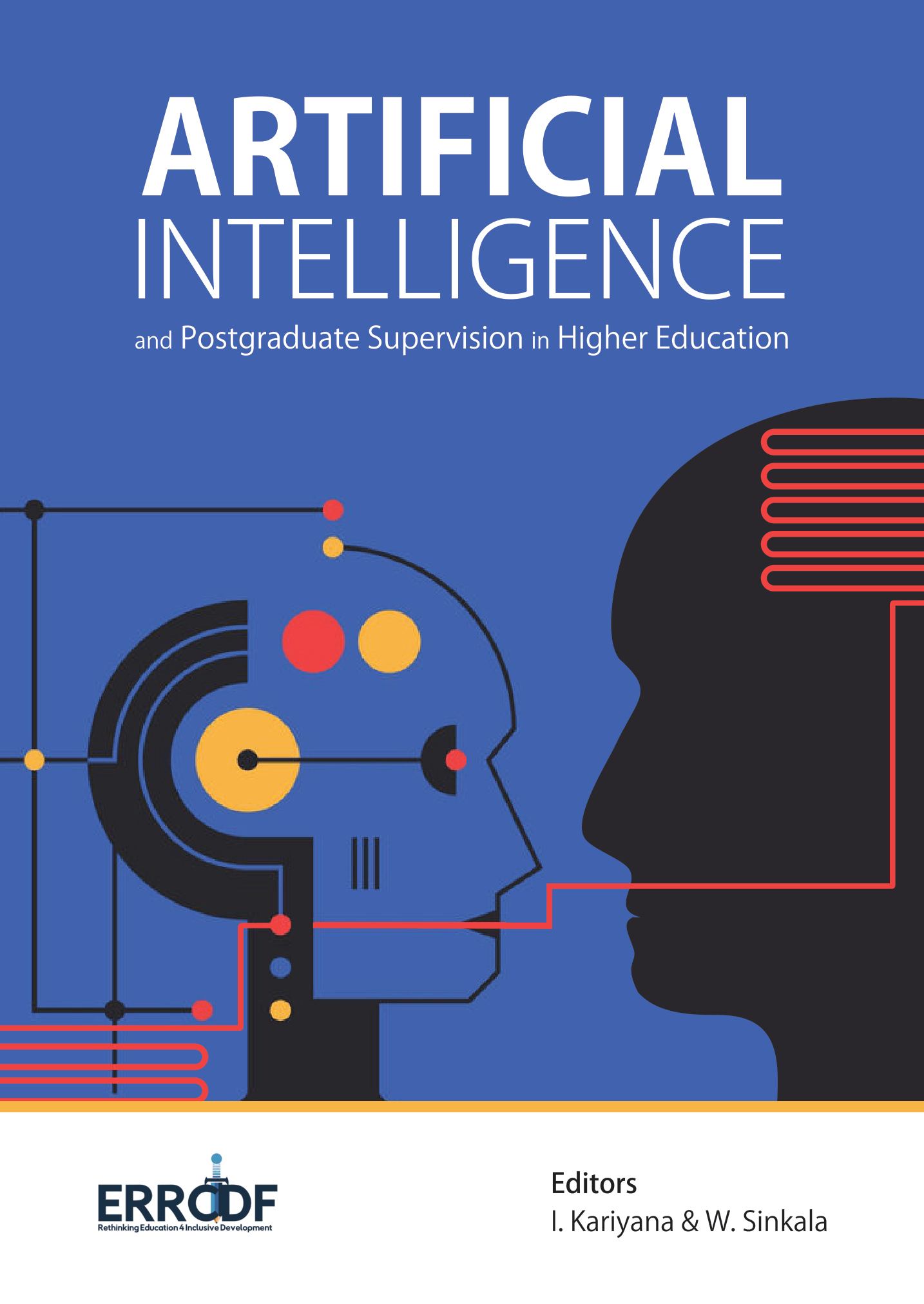
Effective AI Integration in Postgraduate Supervision Practices: Policy Implications for South Africa
DOI:
https://doi.org/10.38140/obp4-2026-14Keywords:
Artificial intelligence, higher education, postgraduate supervision, South AfricaAbstract
Artificial Intelligence (AI) is revolutionising postgraduate supervision on a global scale by enhancing research efficiency, automating administrative tasks, and improving student engagement. Nevertheless, the adoption of AI within South African higher education, particularly in historically disadvantaged institutions, remains constrained, primarily due to a paucity of literature regarding AI adoption in postgraduate supervision. This chapter utilises the Unified Theory of Acceptance and Use of Technology (UTAUT) (Venkatesh et al., 2003) to investigate how AI tools are presently employed in postgraduate supervision across various contexts. It examines the constructs influencing the behavioural intentions of supervisors and students to adopt AI and identifies key facilitating conditions that enable its effective integration. A sectoral review was conducted employing document and thematic analysis to synthesise findings. Relevant peer-reviewed literature was sourced from traditional academic databases and AI-powered discovery tools such as SciSpace Deep Review, Elicit.com, NotebookLM, ChatGPT Deep Research, and Gemini Deep Research. Findings indicated that students predominantly utilised ChatGPT to enhance academic writing, assist with literature reviews, and receive immediate feedback, particularly when supervisors were unavailable. Conversely, supervisors employed AI to refine methodologies, data coding, and provide administrative support. Performance expectancy emerged as the most significant predictor of behavioural intention to adopt AI. However, actual adoption was contingent upon facilitating conditions such as AI literacy, peer support, institutional policies, access to infrastructure, and training opportunities. This chapter advocates for the development of comprehensive institutional frameworks to guide the ethical, pedagogical, and equitable integration of AI into postgraduate supervision.
Downloads
Published
Issue
Section
License
Copyright (c) 2026 Petronella Saal, Krish Chetty, Ncediwe Mdlulwa, Nondumiso Masuku

This work is licensed under a Creative Commons Attribution 4.0 International License.